Women lose up to 30% of their dermal collagen in the first five years of menopause. Here is the science behind the sudden aging of your skin and joints.
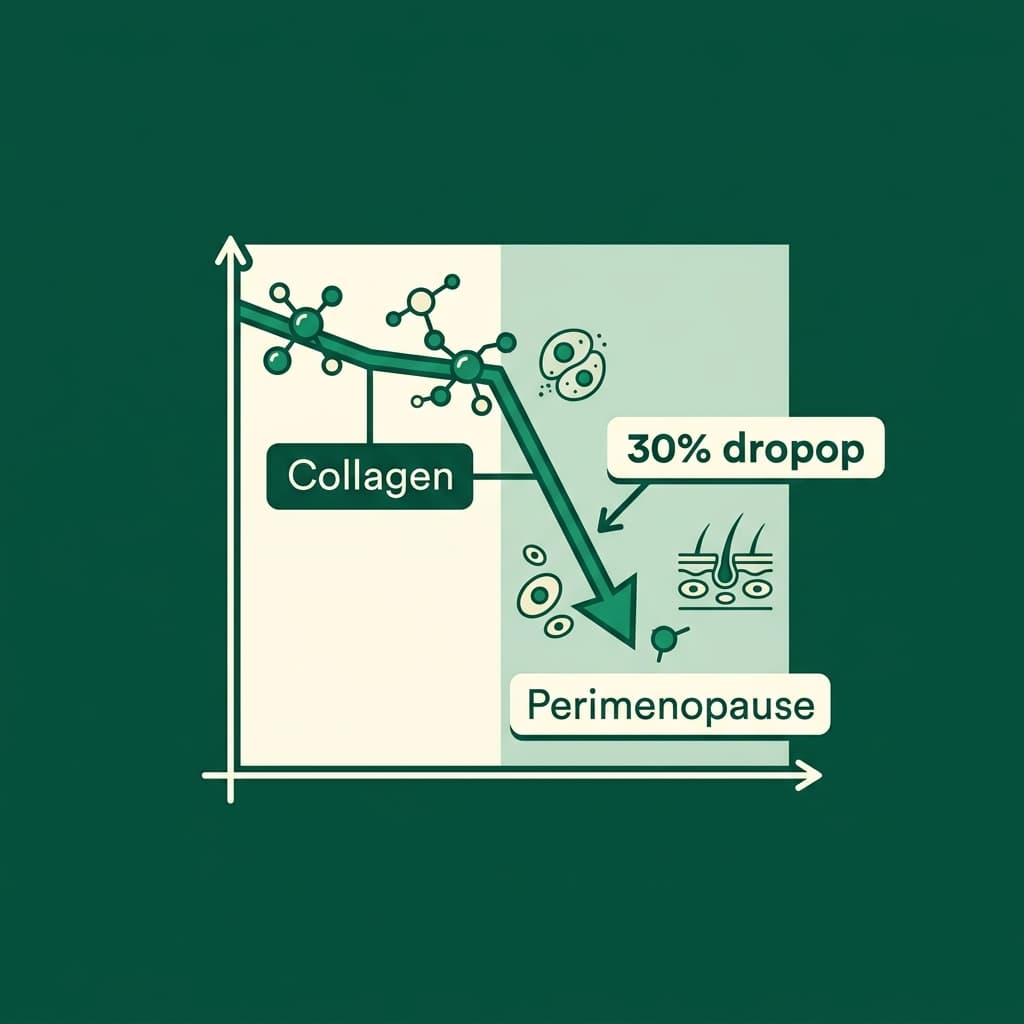
The 30% Drop
It happens seemingly overnight. You look in the mirror and notice a sudden loss of elasticity in your skin. Your joints feel stiffer in the morning. You might even experience sudden issues with pelvic floor laxity.
This isn't just "getting older." This is a highly specific, estrogen-dependent biological event known as the Collagen Crash.
The Estrogen-Collagen Connection
Estrogen does more than regulate your menstrual cycle. It stimulates fibroblasts, the cells in your skin and connective tissues responsible for producing collagen and elastin.
Estrogen receptors are abundant in your skin, your joints, your blood vessels, and your pelvic floor. When estrogen levels plummet during perimenopause, the fibroblasts lose their primary chemical signal to keep working.
The result? Women lose up to 30% of their dermal collagen in the first five years of menopause, followed by a steady 2% decline every year thereafter.
Beyond Aesthetics: Joints and Ligaments
While the cosmetic effects (wrinkles, sagging) are the most visible, the internal effects are often more debilitating.
Collagen is the primary building block of your tendons, ligaments, and cartilage. The sudden drop in collagen synthesis leads to:
- Frozen Shoulder & Joint Pain: Connective tissues become less elastic and more prone to micro-tears and inflammation.
- Pelvic Organ Prolapse: The connective tissue supporting the bladder and uterus weakens.
- Vascular Stiffness: Blood vessels lose their elasticity, contributing to a rise in blood pressure.
How to Rebuild
You can't stop the clock, but you can change the trajectory.
- Topical Retinoids: Vitamin A derivatives (retinol/tretinoin) stimulate fibroblasts from the outside in.
- Hydrolyzed Collagen Peptides: Specific bioactive collagen peptides (Type I and III) have been shown in clinical trials to improve skin elasticity and reduce joint pain when taken orally.
- Systemic HRT: Hormone Replacement Therapy, particularly when started early in the transition, is the most effective way to preserve total body collagen and prevent the 30% crash.
Research Facts
- Fact 1: The decline in skin collagen is directly correlated with estrogen deficiency, not chronological age.
- Fact 2: Women lose 30% of their type I and III collagen in the first five years following menopause.
- Fact 3: Hormone replacement therapy has been shown to increase epidermal hydration, skin elasticity, and skin thickness.
Scientific References
- Brincat, M. P. (2000). "Hormone replacement therapy and the skin." Maturitas.
- Castelo-Branco, C., et al. (1998). "Facial wrinkling in postmenopausal women. Effects of smoking status and hormone replacement therapy." Maturitas.