How the trillions of bacteria in your digestive tract dictate whether you clear estrogen safely or recycle it into a toxic loop.
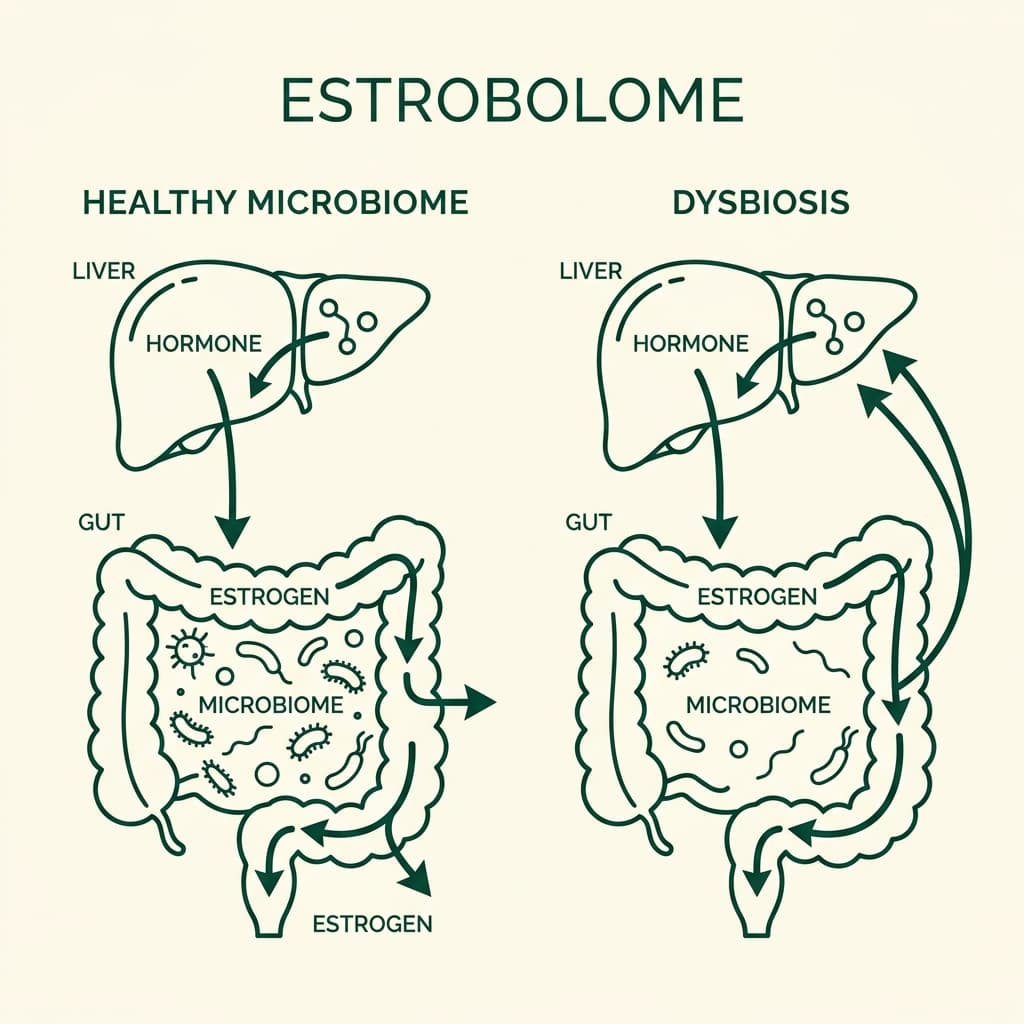
The Estrobolome: Your Gut's Hidden Hormone Factory
When we talk about menopause and hormone balance, we almost exclusively talk about the ovaries. But there is a silent partner in your hormone metabolism that dictates how you feel every single day: your gut microbiome.
Specifically, a specialized collection of bacteria known as the estrobolome.
If you are experiencing unexpected weight gain, severe bloating, breast tenderness, or heavy periods during perimenopause, the problem might not just be your ovaries fluctuating. The problem might be that your gut is recycling old estrogen back into your bloodstream.
What is the Estrobolome?
Your liver's job is to process circulating estrogen. Once the estrogen has done its job, the liver packages it up (conjugates it) and sends it into your intestines to be excreted in your stool.
However, certain bacteria in your gut produce an enzyme called beta-glucuronidase.
If you have an overgrowth of these specific bacteria (a state of dysbiosis), this enzyme unpacks the estrogen before it can leave your body. It essentially un-conjugates the estrogen, allowing it to be reabsorbed through the intestinal wall and sent straight back into circulation.
The Toxic Recycling Loop
When your estrobolome is out of balance, you enter a toxic recycling loop. Your body is making estrogen, your liver is trying to get rid of it, but your gut keeps throwing it back in.
This leads to a state known as Estrogen Dominance (or more accurately, estrogen excess relative to progesterone). Even if your total estrogen is dropping due to perimenopause, if you are recycling it, you will experience the symptoms of high estrogen:
- Intense breast tenderness
- Sudden weight gain around the hips and thighs
- Heavy, clotted periods
- Mood swings and irritability
- Histamine intolerance (hives, sudden allergies)
How to Fix Your Estrobolome
You cannot fix a gut-driven hormone imbalance with hormone therapy alone. You have to fix the exit route.
- Cruciferous Vegetables: Broccoli, cauliflower, and Brussels sprouts contain DIM (Diindolylmethane) and Indole-3-Carbinol, which help the liver properly package estrogen down the safest metabolic pathways.
- Calcium D-Glucarate: This powerful compound directly inhibits the beta-glucuronidase enzyme in the gut. If you have severe estrogen dominance symptoms, Calcium D-Glucarate essentially acts as a "stop" sign for estrogen recycling.
- Fermented Foods & Fiber: The estrobolome requires a diverse microbiome. Soluble fiber binds to the packaged estrogen to carry it out of the body, while fermented foods (kefir, sauerkraut) crowd out the beta-glucuronidase-producing bacteria.
Research Facts
- Fact 1: The estrobolome is a collection of enteric bacterial genes capable of metabolizing estrogens.
- Fact 2: High levels of beta-glucuronidase activity in the gut are directly linked to elevated systemic estrogen levels and an increased risk of estrogen-driven conditions.
- Fact 3: Modulating the gut microbiome through diet, prebiotics, and specific inhibitors like Calcium D-Glucarate can significantly alter circulating estrogen levels.
Scientific References
- Baker, J. M., et al. (2017). "Estrogen-gut microbiome axis: Physiological and clinical implications." Maturitas.
- Kwa, M., et al. (2016). "The Intestinal Microbiome and Estrogen Receptor-Positive Female Breast Cancer." JNCI: Journal of the National Cancer Institute.