Navigating the complex intersection of declining ovarian reserve, unpredictable ovulation, and what it means for your family planning.
The Paradox of Perimenopause
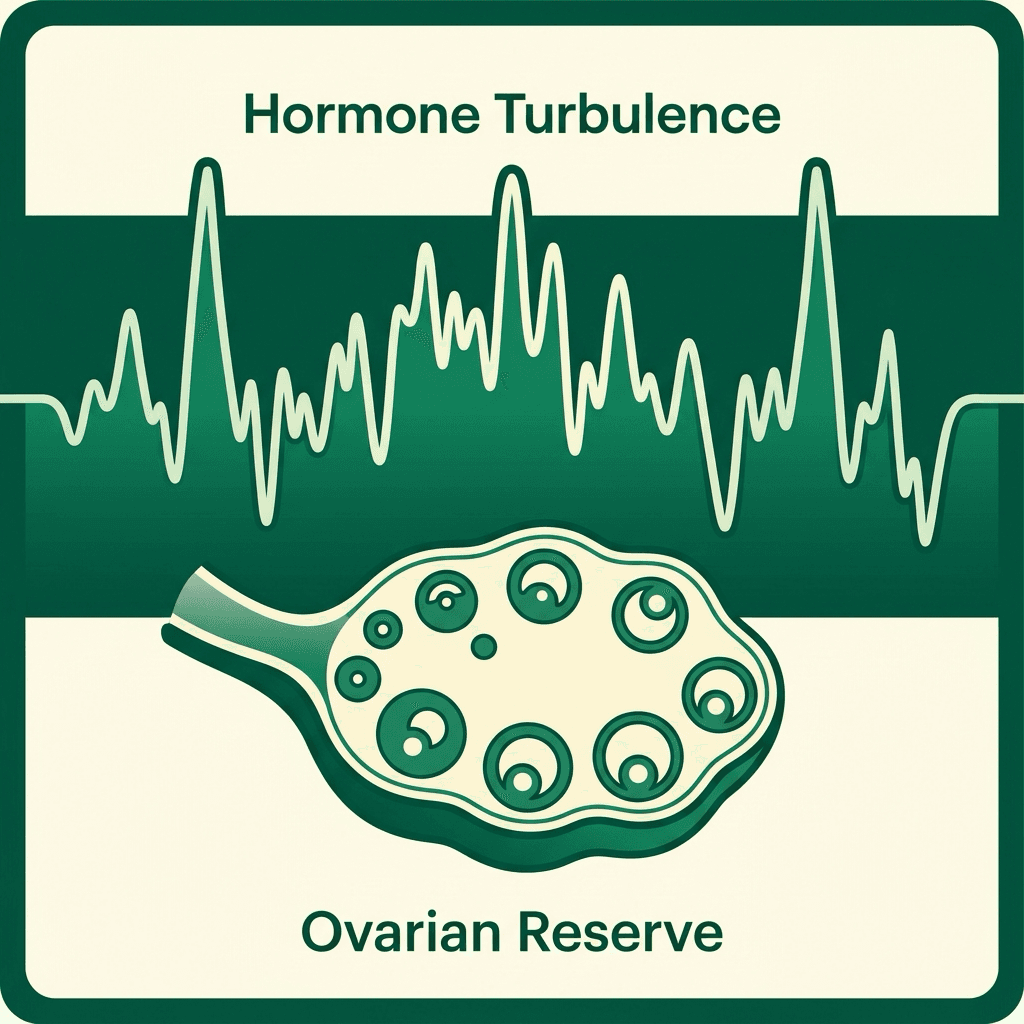
The years leading up to menopause are characterized by a profound and sometimes confusing paradox: your overall ovarian reserve is declining, making conception more difficult, yet ovulation becomes highly erratic and unpredictable, meaning accidental pregnancy is a very real possibility.
Many women assume that once they enter perimenopause, their reproductive years are safely behind them. This misconception leads to both missed windows for those still hoping to conceive and unexpected surprises for those who thought they were in the clear.
The Science of Unpredictable Ovulation
As your ovarian reserve diminishes, your brain attempts to compensate by pumping out more Follicle Stimulating Hormone (FSH). This high FSH can sometimes stimulate multiple follicles to develop at once, or cause ovulation to happen much earlier in the cycle than you are used to.
This creates a highly chaotic hormonal environment:
- The Twin Peak: The increased FSH can lead to "double ovulation," which is why fraternal twin rates naturally peak in women in their late 30s.
- The Shortened Cycle: Ovulation might occur as early as day 8 or 9 of your cycle, rendering standard rhythm-method birth control highly ineffective.
- The False Start: You may experience anovulatory cycles (bleeding without releasing an egg) followed by a hyper-ovulatory cycle.
What This Means For You
If you are trying to conceive during perimenopause, you need to be aware that your fertile window may be significantly shifted and your egg quality is decreasing. Working with a reproductive endocrinologist early is critical.
If you are absolutely done having children, you cannot rely on your age or irregular periods as contraception. Until you have gone 12 full months without a period (the clinical definition of menopause), you can still get pregnant.
Research Facts
- Fact 1: Spontaneous dizygotic (fraternal) twinning rates peak in women aged 35-39, a direct result of elevated FSH levels causing multiple follicle development during early perimenopause.
- Fact 2: Unintended pregnancy rates in women over 40 are second only to those in teenagers, largely due to misconceptions about declining fertility.
- Fact 3: Ovulation during perimenopause can occur much earlier in the menstrual cycle, rendering calendar-based fertility awareness methods unreliable.
Scientific References
- Prior, J. C. (1998). "Perimenopause: The complex endocrinology of the menopausal transition." Endocrine Reviews.
- Beemsterboer, S. N., et al. (2006). "The menopausal transition: a possible role for the hormone inhibin B." Human Reproduction Update.