Why treating menopause is actually preventive care for your brain, heart, and bones.
It's Not Just Your Reproductive System
When most women hear the word "menopause," they immediately think of hot flashes and the end of their reproductive years.
This narrow view is precisely why so many women are left vulnerable to chronic diseases in the second half of their lives. Menopause is not merely a reproductive event. It is a profound, systemic neuro-endocrine transition.
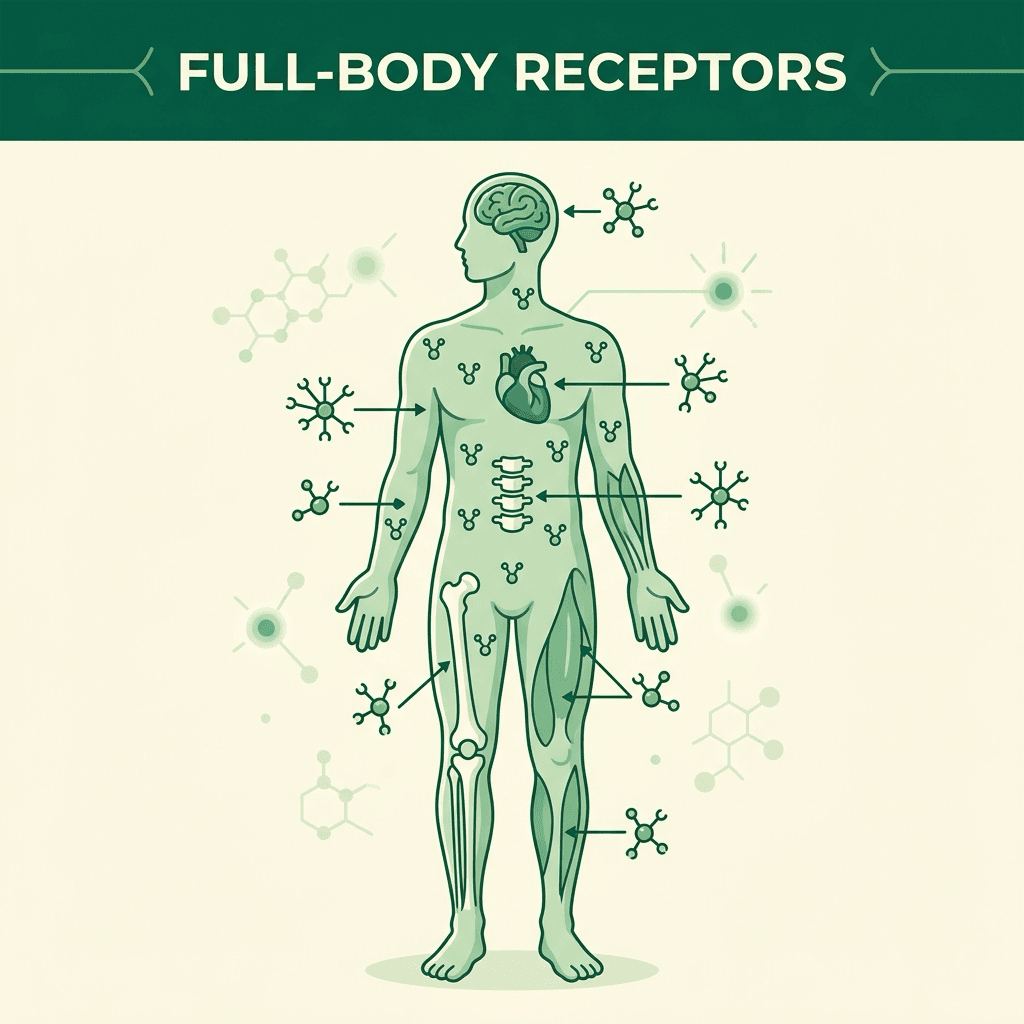
To understand why treating menopause is actually preventive care, you have to understand where your estrogen receptors are located.
The Systemic Nature of Estrogen
Estrogen isn't just a "female hormone" that regulates periods. It is a master physiological regulator. You have estrogen receptors located on almost every organ system in your body.
When your estrogen levels plummet during the menopausal transition, you aren't just losing fertility. You are losing a critical cellular signal that every one of these organs relied upon.
- The Brain: Estrogen drives glucose metabolism in the brain. When it drops, the brain experiences an energy crisis, manifesting as brain fog, mood changes, and eventually, an increased risk of neurodegenerative disease.
- The Cardiovascular System: Estrogen keeps the lining of your blood vessels flexible and regulates your lipid profile. Without it, your blood vessels stiffen, and cardiovascular disease becomes the number one killer of postmenopausal women.
- The Skeleton: Estrogen acts as the brake pedal on the cells that break down bone. Without it, your bones begin to dissolve faster than they can be rebuilt, leading directly to osteoporosis.
The Preventive Care Paradigm
Because estrogen receptors are systemic, hormone replacement therapy (HRT) should not be viewed merely as a treatment for temporary symptoms like hot flashes.
It should be viewed as a long-term preventive care strategy. Providing your body with systemic estrogen replaces the lost signal, protecting your brain, your heart, and your bones for the decades to come.
Research Facts
- Fact 1: Estrogen receptors (ER-alpha and ER-beta) are widely distributed throughout the human body, including the central nervous system, cardiovascular system, and skeletal system.
- Fact 2: The incidence of cardiovascular disease in women equals that of men within 10 years after menopause, largely due to the loss of estrogen's protective effect on the endothelium.
- Fact 3: Early initiation of hormone therapy (within 10 years of menopause onset) is associated with a significant reduction in all-cause mortality, primarily driven by a reduction in cardiovascular events.
Scientific References
- Hamilton, K. J., et al. (2017). "Estrogen receptor biology." Pathology.
- Rosano, G. M., et al. (2007). "Menopause and cardiovascular disease: the evidence." Climacteric.