The sharp decline in estrogen during perimenopause fundamentally alters how your body processes glucose. Here is why you are suddenly gaining visceral fat.
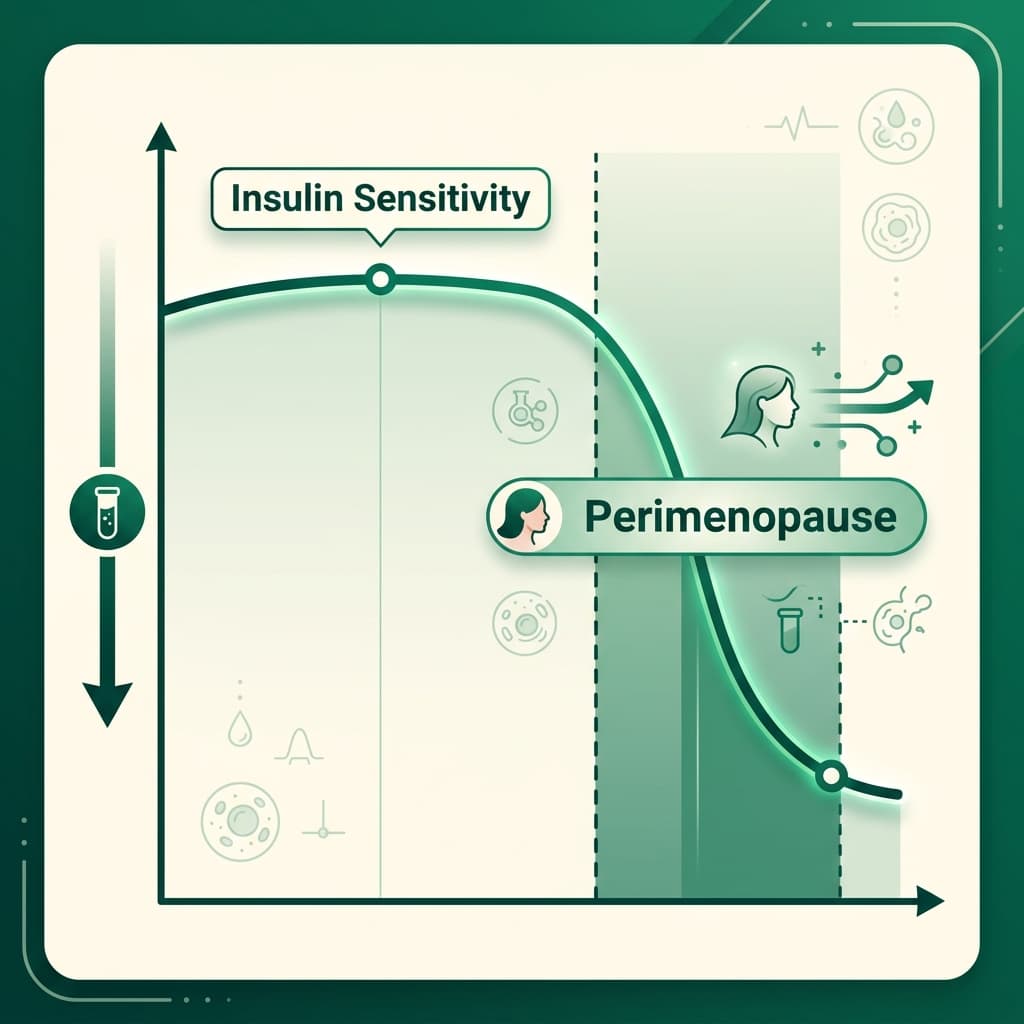
The Insulin Resistance Cliff
For decades, you've relied on a simple formula: eat a little less, move a little more, and your body responds. But suddenly, in your early 40s, the formula breaks.
You haven't changed your diet. You haven't stopped exercising. Yet, you are rapidly accumulating weight—specifically around your midsection.
This isn't a failure of willpower. It is a fundamental shift in your metabolic architecture.
The Role of Estrogen in Glucose Metabolism
Estrogen (specifically Estradiol) is not just a reproductive hormone; it is a master metabolic regulator. Estradiol makes your cells highly sensitive to insulin, allowing them to efficiently absorb glucose from your bloodstream and use it for energy.
When estrogen levels become erratic and eventually plummet during perimenopause, your cells become insulin resistant.
The Visceral Fat Trap
Because your cells are no longer efficiently absorbing glucose, your pancreas pumps out more insulin to force the sugar into the cells. This chronic state of hyperinsulinemia signals your body to store excess glucose as fat.
Crucially, in a low-estrogen environment, this fat is preferentially stored as visceral fat (deep belly fat) rather than subcutaneous fat (hips and thighs). Visceral fat is highly inflammatory and further exacerbates insulin resistance, creating a vicious cycle.
How to Fix It
You cannot diet your way out of a hormonal shift. You have to change how you signal your metabolism.
- Prioritize Protein & Fiber: These blunt the insulin spike of meals.
- Heavy Resistance Training: Muscle is your body's largest glucose sink. Building muscle improves insulin sensitivity independently of estrogen.
- Consider HRT: Transdermal estradiol has been shown to improve insulin sensitivity and reduce visceral fat accumulation when started early in the transition.
Research Facts
- Fact 1: Women experience a rapid increase in visceral fat mass during the menopausal transition, independent of age or total body fat changes.
- Fact 2: Estrogen deficiency directly impairs the action of insulin in skeletal muscle and adipose tissue.
- Fact 3: Hormone replacement therapy (HRT) can prevent the shift toward central fat distribution when initiated early.
Scientific References
- Lovejoy, J. C., et al. (2008). "Increased visceral fat and decreased energy expenditure during the menopausal transition." International Journal of Obesity.
- Mauvais-Jarvis, F., et al. (2013). "The role of estrogens in control of energy balance and glucose homeostasis." Endocrine Reviews.