Testosterone isn't just a male hormone. Its decline in perimenopause is responsible for lost muscle mass, vanished motivation, and deep brain fog. Here is the science of female testosterone.
The Missing Hormone
When we talk about menopause, we talk about estrogen and progesterone. We talk about hot flashes and anxiety.
But there is a third, silent player in the menopausal transition: Testosterone.
Most women are shocked to learn that before menopause, they have higher circulating levels of testosterone than estrogen. It is a critical hormone for female biology, driving everything from muscle protein synthesis to cognitive drive.
And just like estrogen, it declines.
The Biological Impact of Low Testosterone
When testosterone drops, the impact is systemic. It goes far beyond a loss of libido (though that is a common symptom).
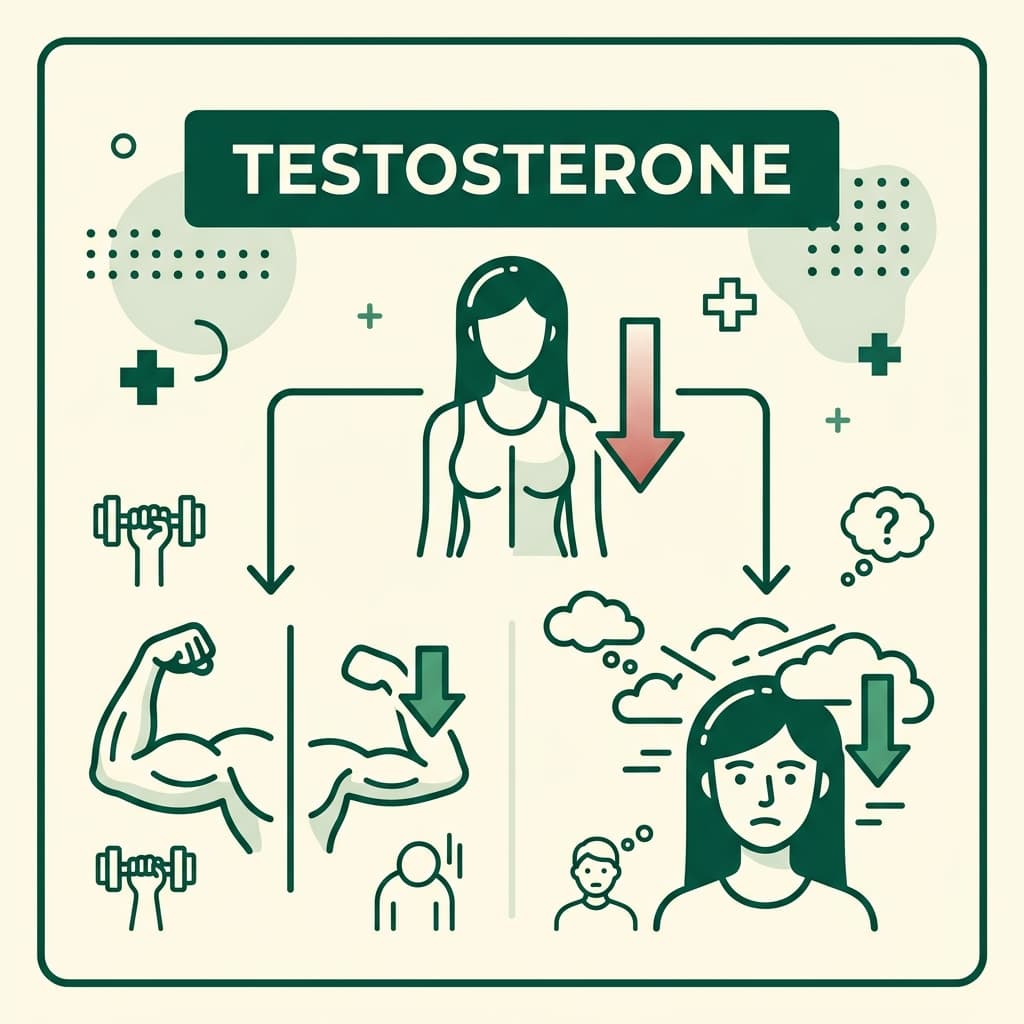
- The Muscle Wasting (Sarcopenia): Testosterone is an anabolic hormone. It signals your body to build and maintain muscle tissue. Without it, you become vulnerable to sarcopenia—age-related muscle loss. You can lift heavy weights, but without the testosterone signal, you will struggle to build the muscle asset that protects your longevity.
- The Cognitive Fog: Testosterone crosses the blood-brain barrier. It acts as a neuro-modulator, specifically influencing the dopamine pathways that govern motivation, drive, and focus. The sudden "loss of ambition" or apathy many women feel in midlife is often a testosterone deficit, not clinical depression.
- Bone Density: While estrogen is critical for stopping bone loss, testosterone actually helps build new bone.
The Diagnostic Problem
Testing testosterone in women is notoriously difficult. The standard lab assays were designed to measure the high levels found in men. They are often not sensitive enough to accurately detect the subtle, low-level deficiencies that cause profound symptoms in women.
Furthermore, "normal" reference ranges for women are often just statistical averages of a sick population, not optimal levels for a high-performing executive.
The Protocol
Restoring testosterone is a complex but often game-changing intervention for women in midlife.
- Systemic HRT: Testosterone can be prescribed off-label for women, typically as a compounded cream or gel. It must be dosed carefully by a specialist to avoid virilizing side effects (like hair loss or voice changes), though these are rare at physiological female doses.
- The Anabolic Signal: You must give your body a reason to use the testosterone you have. Heavy resistance training (lifting weights that challenge you in the 5-8 rep range) provides the necessary mechanical tension to signal muscle protein synthesis.
- Protein Intake: Ensure you are consuming at least 1.2g of protein per kilogram of body weight to provide the building blocks for muscle and neurotransmitters.
Scientific References
- Glaser, R., & Dimitrakakis, C. (2013). "Testosterone therapy in women: Myths and misconceptions." Maturitas.