Chronic stress doesn't just make you tired; it rapidly depletes your cellular magnesium, locking your nervous system in a state of high alert.
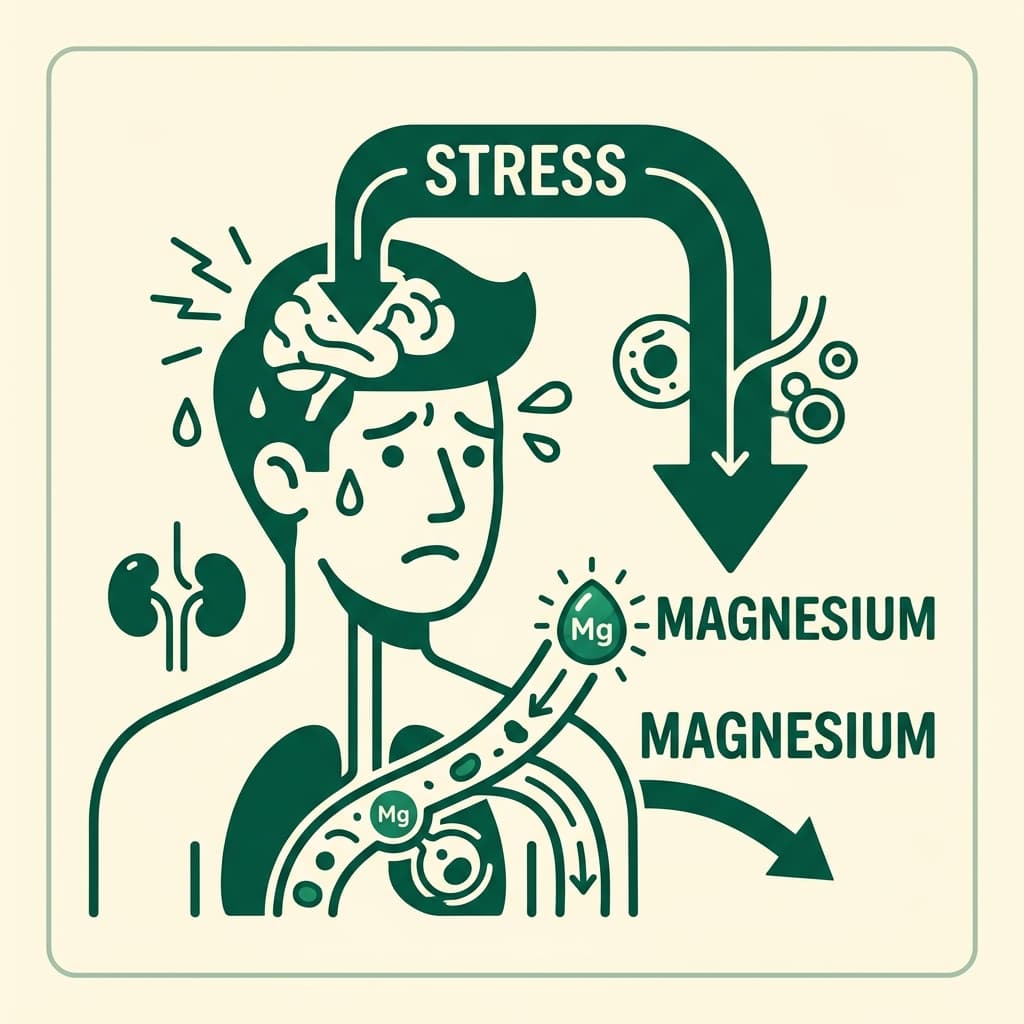
The Mineral Depletion Cycle
When you are constantly stressed, you don't just "feel" tired. Your body is actively burning through key minerals at an accelerated rate to maintain that state of high alert.
The most critical mineral in this equation is Magnesium.
Magnesium is the physiological brake pedal for your nervous system. It is a necessary cofactor in over 300 enzymatic reactions in the human body, but its primary role in stress management is regulating the HPA axis (Hypothalamic-Pituitary-Adrenal axis) and calming the nervous system.
When you are stressed, your body dumps magnesium into your urine to clear the way for cortisol and adrenaline to take over. This is the Magnesium Burn Rate.
The Vicious Cycle
As your magnesium levels drop, your nervous system loses its ability to calm down. The lack of magnesium actually increases your sensitivity to stress, meaning even smaller stressors will trigger a massive cortisol spike.
This leads to a vicious cycle:
- Stress depletes Magnesium.
- Low Magnesium increases the stress response.
- The increased stress response further depletes Magnesium.
This is why you wake up at 3 AM with a racing heart. This is why you feel "wired and tired."
How to Break the Cycle
You cannot simply take a cheap magnesium oxide supplement and expect to fix burnout. You must stop the leak while simultaneously refilling the tank.
- Stop the Leak: You must aggressively manage your cortisol spikes. This means prioritizing sleep, avoiding fasted high-intensity workouts, and moderating caffeine intake.
- Refill the Tank (Strategically): Choose highly bioavailable forms of magnesium.
- Magnesium Glycinate: Best for anxiety and sleep, as the glycine molecule has a calming effect on the brain.
- Magnesium Threonate: The only form proven to cross the blood-brain barrier, excellent for brain fog and cognitive support.
- Electrolyte Balance: Magnesium doesn't work in isolation. Ensure adequate sodium and potassium intake (the "Adrenal Cocktail") to support cellular hydration and adrenal function.
Research Facts
- Fact 1: Stress hormones like adrenaline and cortisol increase the renal excretion of magnesium, actively depleting the body's stores during periods of chronic stress.
- Fact 2: Magnesium deficiency directly induces a stress response by increasing the release of stress hormones, creating a self-perpetuating cycle of depletion.
- Fact 3: Different forms of magnesium have different physiological effects. Magnesium Glycinate is highly bioavailable and particularly effective for neurological calming and sleep architecture.
Scientific References
- Seelig, M. S. (1994). "Consequences of magnesium deficiency on the enhancement of stress reactions; preventive and therapeutic implications." Journal of the American College of Nutrition.
- Cuciureanu, M. D., & Vink, R. (2011). "Magnesium and stress." Magnesium in the Central Nervous System.