If you are suddenly experiencing debilitating migraines in your 40s, it isn't stress. It is the neurological fallout of violently fluctuating estrogen levels.
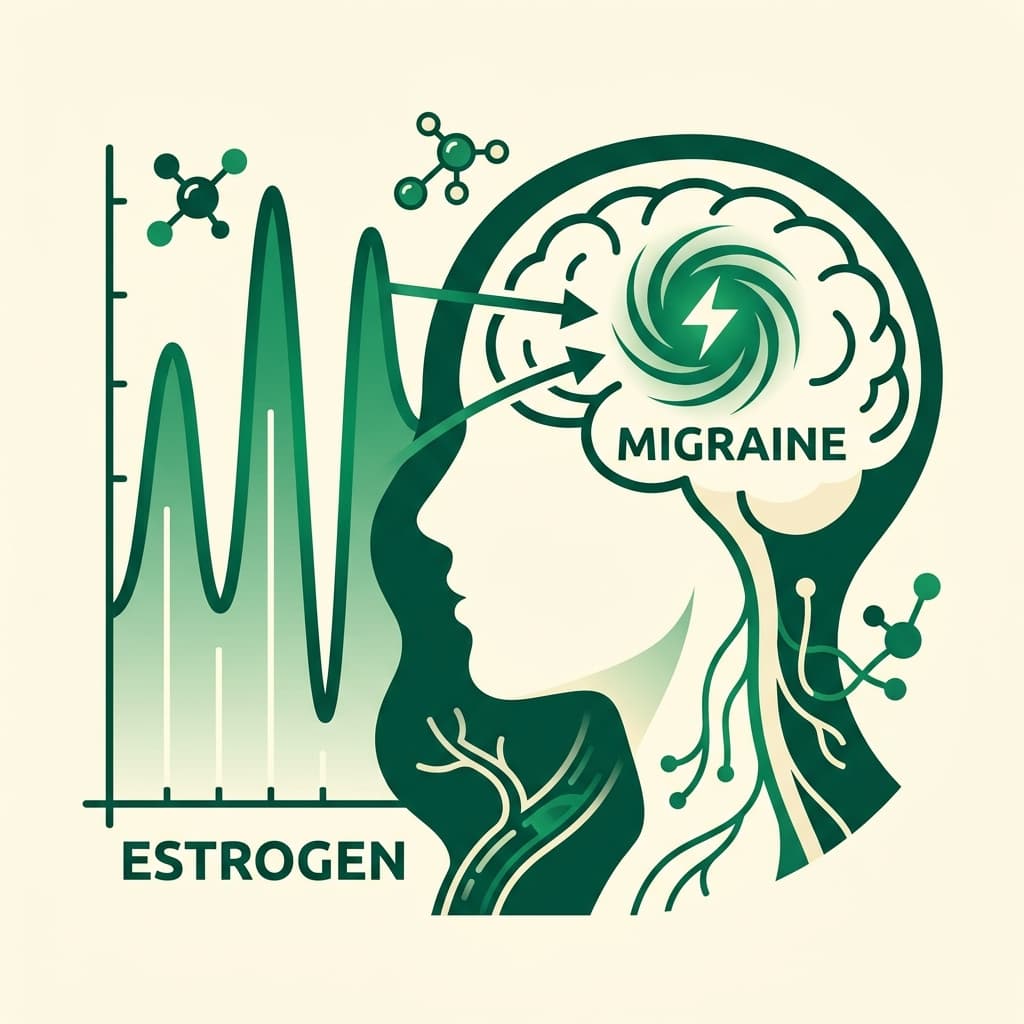
The Migraine Surge
Many women who have never had a headache in their lives suddenly find themselves debilitated by migraines in their 40s. Others, who had mild headaches in their 20s, experience a severe escalation.
When they mention this to their doctors, they are often told they are simply "stressed."
They are not just stressed. They are experiencing the neurological consequences of a violently fluctuating hormone profile.
The Estrogen Withdrawal Hypothesis
Migraines are a neurological event, but in women, they are deeply tied to the endocrine system.
Estrogen modulates the neurotransmitters (like serotonin) that regulate pain pathways in the brain. It also affects the dilation and constriction of blood vessels.
During a normal menstrual cycle in your 20s or 30s, estrogen rises predictably and falls predictably. But in perimenopause, the transition is chaotic. Estrogen levels don't just slowly decline; they spike wildly and crash suddenly.
It is this sudden drop in estrogen—the withdrawal—that triggers the migraine cascade in susceptible brains. The steeper the drop, the more severe the migraine.
Why Standard Treatments Fail
Standard migraine medications (triptans, NSAIDs) treat the symptom once the cascade has begun. They do not address the root biological trigger: the fluctuating estrogen environment.
This is why many women find their usual migraine medications stop working during perimenopause. You are trying to put out a fire while someone is still pouring gasoline on it.
The Protocol
To stop the Migraine Surge, you have to stabilize the biological environment.
- Continuous HRT: The goal is to stop the wild fluctuations. Providing a steady, continuous dose of transdermal estrogen (via patch or gel) smooths out the biological rollercoaster. By preventing the steep estrogen drops, you remove the trigger.
- Magnesium Glycinate: Magnesium deficiency lowers the threshold for a migraine attack. Supplementing with 400-600mg of Magnesium Glycinate daily is a powerful prophylactic.
- The Histamine Connection: Fluctuating estrogen also impairs your body's ability to clear histamine. For some women, adopting a temporary low-histamine diet can significantly reduce migraine frequency during the perimenopausal transition.
Scientific References
- MacGregor, E. A. (2012). "Oestrogen and attacks of migraine with and without aura." The Lancet Neurology.