Estrogen dominance in perimenopause can bind up your active thyroid hormone. If you are gaining weight, losing hair, and feeling exhausted, it might be your thyroid, not just menopause.
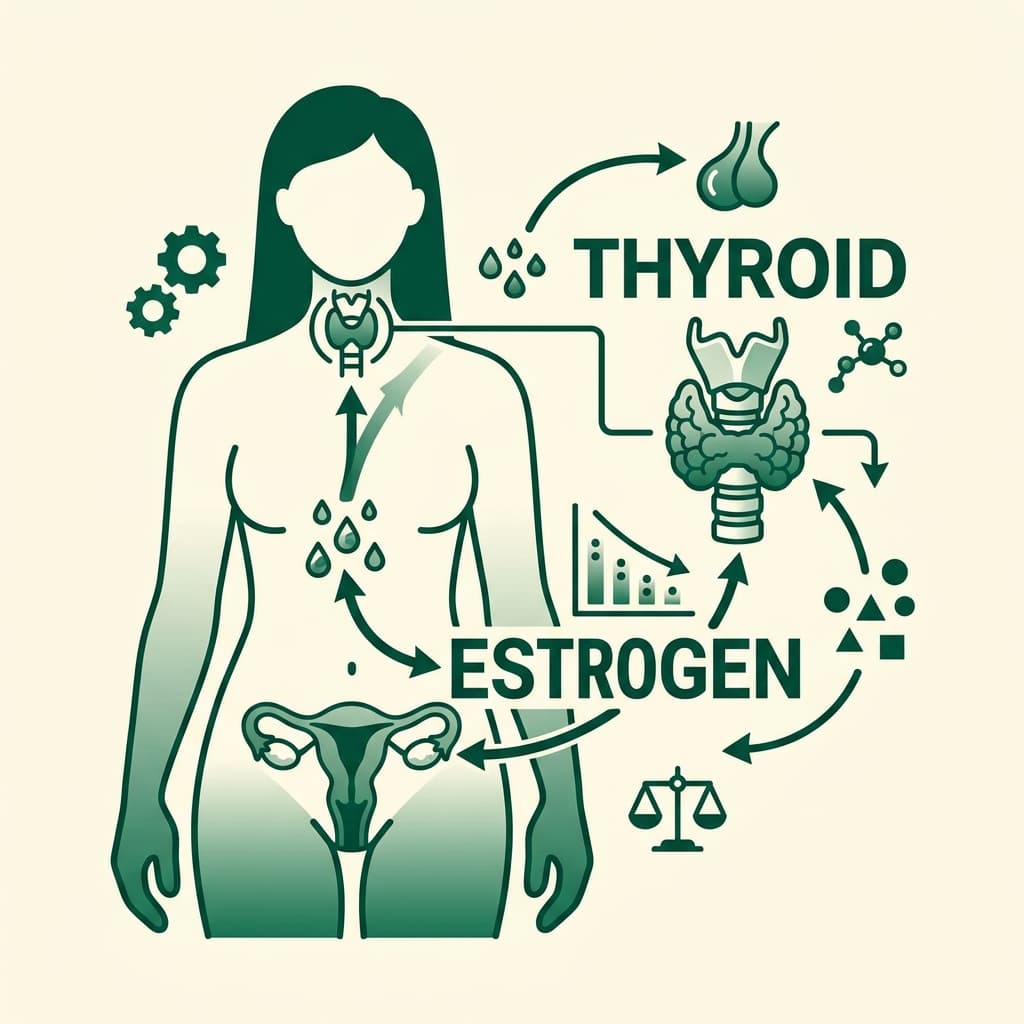
The Thyroid Trap
It is a story we hear constantly: A woman in her mid-40s goes to her doctor. She is exhausted, gaining weight around her middle, her hair is thinning, and she feels cold all the time.
Her doctor runs a standard TSH (Thyroid Stimulating Hormone) test. The results come back "normal." The doctor smiles and says, "It's just perimenopause. Eat less and exercise more."
This is the Thyroid Trap.
The Estrogen-Thyroid Connection
During perimenopause, progesterone levels often drop faster than estrogen levels, creating a state of relative Estrogen Dominance.
Here is the biochemical reality that standard tests miss: Excess estrogen increases the production of a protein called Thyroid Binding Globulin (TBG).
TBG acts like a sponge. It binds to your thyroid hormone (T3 and T4), rendering it inactive. Your thyroid might be producing enough hormone (which is why your TSH looks normal), but that hormone is bound up by TBG and cannot enter your cells to create energy and run your metabolism.
You are functionally hypothyroid, even with "normal" labs.
The Standard Test is Inadequate
A standard TSH test only measures the signal from your brain to your thyroid. It does NOT measure how much active thyroid hormone is actually available to your cells.
To see the full picture, you must request a full thyroid panel, including:
- TSH
- Free T4
- Free T3 (The active hormone)
- Reverse T3 (The "brake" on your metabolism)
- Thyroid Antibodies (TPO and TgAb to rule out Hashimoto's)
The Protocol
If you are caught in the Thyroid Trap, you cannot simply "eat less and exercise more." That will only increase cortisol and further suppress thyroid function.
Instead, focus on:
- Addressing Estrogen Dominance: Support liver detoxification (where estrogen is metabolized) with cruciferous vegetables and potentially DIM supplements.
- Nutrient Support: Your thyroid needs Selenium, Zinc, and Iodine to function optimally.
- Stress Management: High cortisol reduces the conversion of T4 to active T3. Prioritize sleep and gentle movement over high-intensity interval training.
Scientific References
- Santin, A. P., & Furlanetto, T. W. (2011). "Role of estrogen in thyroid function and growth management." Journal of Thyroid Research.