Why you are suddenly waking up at 3 AM every night, and how hormonal shifts are fundamentally changing the structure of your sleep.
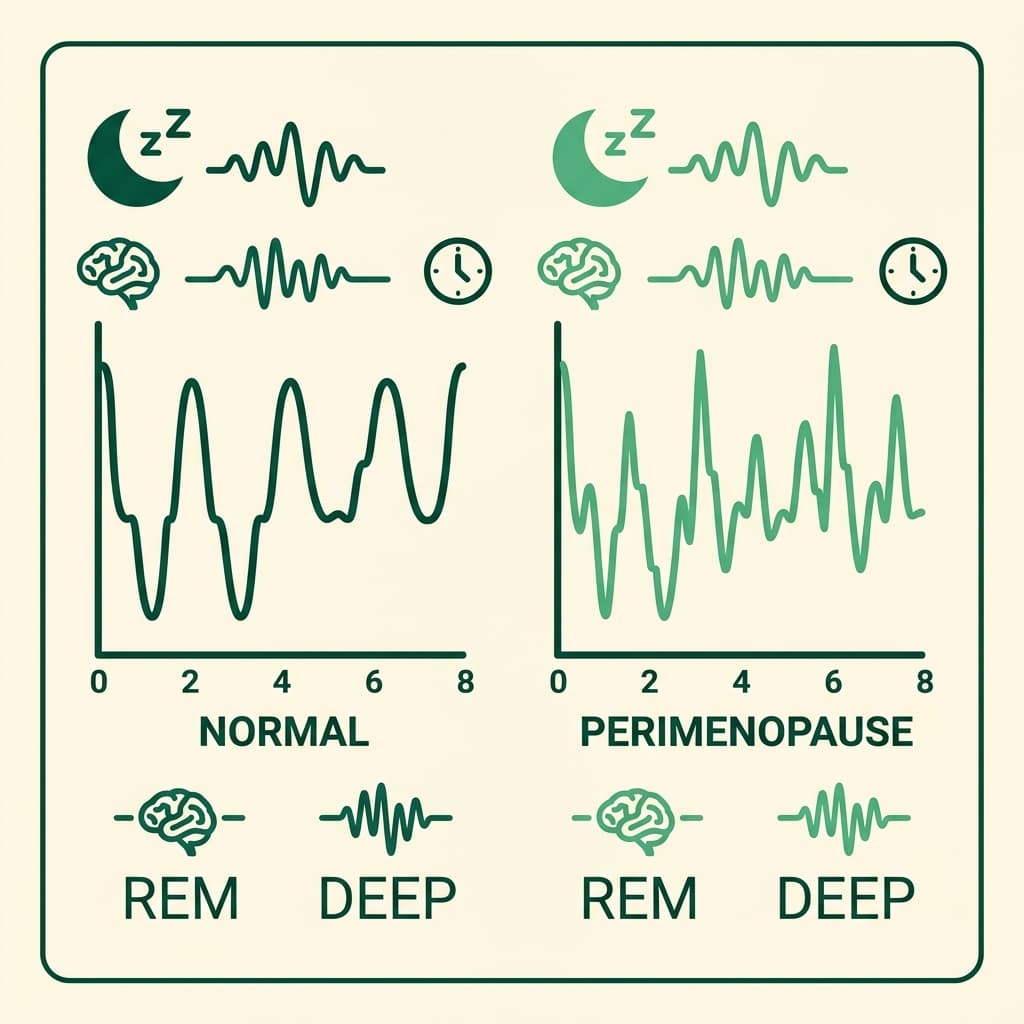
The Collapse of Sleep Architecture
For years, you could fall asleep easily and sleep straight through the night. Now, you find yourself staring at the ceiling at 3:14 AM, night after night. You aren't necessarily stressed about a specific event. You are just awake.
This is one of the most common and debilitating symptoms of perimenopause. And it isn't just about hot flashes waking you up. It is a fundamental collapse of your sleep architecture.
What is Sleep Architecture?
Sleep is not a uniform state. Over the course of the night, your brain cycles through different stages: Light Sleep, Deep Sleep (Slow-Wave Sleep), and REM (Rapid Eye Movement) Sleep.
This structure—the amount of time spent in each stage and the sequence of these cycles—is your sleep architecture.
During perimenopause, the withdrawal of specific hormones essentially breaks this structure, making it harder to fall asleep, stay asleep, and get the restorative Deep Sleep you need to function.
The Progesterone Drop
The primary culprit for midlife insomnia is the decline of progesterone.
Progesterone is your brain's natural calming hormone. It metabolizes into a neurosteroid called allopregnanolone, which binds to GABA receptors in the brain. GABA is the primary inhibitory neurotransmitter—it is what slows down brain activity and allows you to drift into sleep.
When progesterone levels plummet during perimenopause (often much earlier than estrogen levels drop), you lose this critical GABA-ergic signaling. Your brain remains in a hyper-excitable state.
The Cortisol Rebound
Without the calming influence of progesterone, your nervous system is much more susceptible to the activating effects of cortisol (your stress hormone).
Normally, cortisol drops in the evening and stays low throughout the night, only rising in the early morning to wake you up. However, in perimenopause, a slight fluctuation in blood sugar or a drop in estrogen can trigger a massive cortisol spike in the middle of the night.
This is the 3 AM wake-up. Your brain perceives a stressor and floods your system with cortisol and adrenaline. You wake up instantly, heart racing, completely alert.
Rebuilding Your Sleep
You cannot "sleep hygiene" your way out of a hormonal deficit. Dark rooms and chamomile tea are helpful, but they don't replace missing neurotransmitters.
- Micronized Progesterone: For many women, taking bioidentical (micronized) progesterone at bedtime is the most effective intervention. It directly restores the GABA-ergic signaling, allowing the brain to enter and maintain Deep Sleep.
- Magnesium Glycinate: Magnesium is essential for calming the nervous system. The glycinate form is particularly effective for sleep because the glycine amino acid acts as an additional inhibitory neurotransmitter in the brain.
- Blood Sugar Stabilization: To prevent the 3 AM cortisol spike, ensure you are not going to bed with crashing blood sugar. A small, high-protein/fat snack (like a handful of almonds) before bed can keep glucose levels stable throughout the night.
Research Facts
- Fact 1: Women in the menopausal transition experience a significant decrease in total sleep time and sleep efficiency, independent of age.
- Fact 2: The decline in endogenous progesterone is directly correlated with a reduction in GABA receptor activation, leading to hyperarousal and insomnia.
- Fact 3: Hormone therapy, particularly protocols including micronized progesterone, has been shown to significantly improve sleep quality and reduce nighttime awakenings in perimenopausal women.
Scientific References
- Baker, F. C., et al. (2018). "Sleep problems during the menopausal transition: prevalence, impact, and management challenges." Nature and Science of Sleep.
- Polo-Kantola, P. (2011). "Sleep problems in midlife and beyond." Maturitas.